
The Worst Best Pictures of All Time

Over at Grantland, they’ve been running down the “greatest Oscar travesties of all time”. Since no one at Grantland has a cultural memory that goes back further than Rocky, their “greatest” travesties of “all time” don’t include anything earlier than, well, Rocky — which wasn’t even a travesty because the original Rocky is a very good movie.

Early in our marriage, my wife and I wanted some kind of hobby to do together. We both love movies, so we decided to watch every Best Picture winner, in order. It took us over a year, and some of the earlier movies were quite difficult to find. (This was the late 1990s, before Netflix, Hulu, etc.) Believe me, it was terribly disappointing to search all over town for a copy of an older film to rent or borrow, just to discover it was awful. These terrible Best Picture winners are etched into my brain forever.

5. The Lost Weekend (1945)
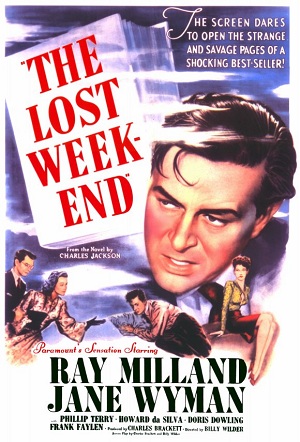
I lost 2 hours watching The Lost Weekend.

I lost 2 hours watching The Lost Weekend.

Being an alcoholic is terrible. You have now seen The Lost Weekend.

Though there are a couple of great scenes with Doris Dowling as a fast-talking bar floozy who doesn’t finish the ends of words. “Go out with you? Don’t be ridic.”

4. The Greatest Show On Earth (1952)
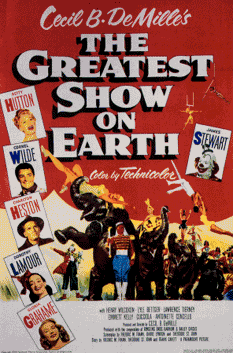
The Greatest Show on Earth

Not the greatest film, though.

Hey kids! Do you like the circus? Oscars voters of 1952 did, giving the Best Picture award to Cecil B. Demille’s The Greatest Show on Earth. This, along with Around the World in 80 Days, was basically an award for a really expensive, visually stunning (for the time) film whose production values are now dwarfed by most network dramas. It was also a bit of a “lifetime achievement” award for the great filmmaker Cecil B. DeMille, which means that the award was really given for how good all his earlier movies were, not for this one. If you’ve ever been to an actual circus, you don’t need to watch this.

3. Gigi (1958)
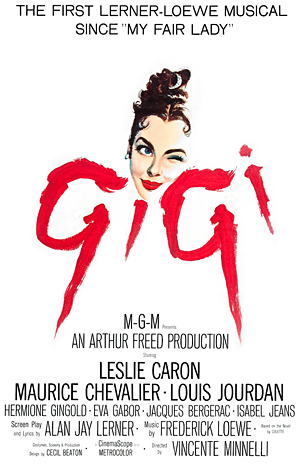
Gigi

I still shudder.

The movie begins with a creepy old man (Maurice Chevalier) singing “Thank Heaven for Little Girls,” and only gets creepier from there. The plot involves a girl/young woman being trained by her family to become a prostitute courtesan, which is a woman who sleeps with men in exchange for money and gifts. This is all played as a romance between Gigi and the man to whom she is going to be sold given, who decides to marry her instead of taking her as his mistress. What a catch!

2. Kramer vs. Kramer (1979)
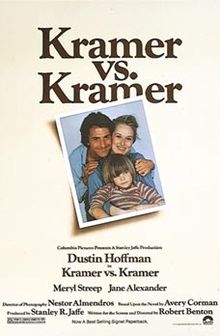
Kramer vs. Kramer

The perfect movie if you want to feel sad.

People in the late 70s liked being sad. Depression was the order of the day. If you’re feeling good about life, watch the three Best Picture winners from 1978 to 1980 — The Deer Hunter, Kramer vs. Kramer, and Ordinary People — and that won’t be a problem any more. Kramer vs. Kramer is one long, depressing journey through a couple’s divorce, with lots of sad shots of sad Dustin Hoffman and his sad little son walking around sadly. I think Chariots of Fire won in 1981 just to help everyone recover from the late 70s.

1. Cimarron
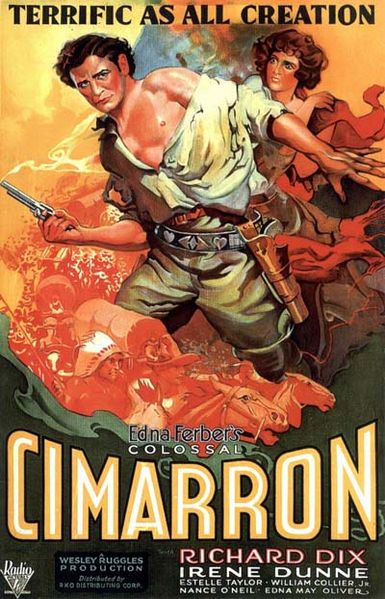
Cimarron

“Terrific as All Creation” – Also, the worst tag line of any Best Picture

Until 1992’s Unforgiven, Cimarron, about the settlement of the Oklahoma territory, had the distinction of being the only Western to have won Best Picture. Two scenes capture how perfectly awful this movie is.

Early in the film, Cimarron (actually, his name is Yancy, but I always just call him Cimarron) is asked to preach the inaugural sermon of the town’s new church, despite being an outspoken skeptic who runs the town newspaper and has no training, ability, or apparent reason to deliver a sermon. Whatever. In his sermon, he denounces the town bad guy and proceeds to shoot him dead in the middle of the sermon. No one sees a problem with this.

Later in the film, because Cimarron is a restless kind of guy, he abandons his wife (Sabra), family, and the newspaper business and disappears into the frontier. His wife, however, takes over the newspaper and makes a pretty good go at things. The movie jumps across several decades, showing her building the tiny newspaper into a frontier media empire and becoming one of the most important people in Oklahoma. Pretty great ending, right? Not exactly. Cimarron is discovered as a washed-up, homeless drifter who has spent the ensuing years working odd jobs in the Oklahoma oil fields. He’s reunited with Sabra — who announces that she has been keeping the business safe for him and hands it all back over to his control. Yes — having built a publishing empire, she gives it all to the worthless bum who abandoned his young children and can’t keep a steady job. This is supposed to be a loving act. I’m sure her hundreds of employees were pretty excited about the prospect of the company being run by a hobo.

Hands down, Cimarron is the worst Best Picture of all time.

A Real Comfortable Chair

Giant Office Chair

When I grow up (to become a giant), this will be my office chair.

Joseph Epstein shares a story in the essay “Quotatious.” On a radio program with several other writers, the host asks Epstein what it takes to be a writer.

I got out of the blocks by saying that Hemingway thought the first requisite of the writer was “an unhappy childhood”; I gave him a little Henry James; I popped in a Tolstoy; at no extra charge, I added that Byron said, “Who would write, who had anything better to do?”

He continued along these lines for several more minutes, until he finally wound down and came to a stop. The next writer, Liz Carpenter, then gave her answer:

“Mr. Epstein is very learned and all,” she said, in a cheerful Southern drawl, “and I was fascinated by everything he had to say. But I just happened to have finished a book about working with my friend Lady Bird Johnson in the White House, and I’ll tell you what, you want to be a writer, honey, first thing you need is a real comfortable chair.”

Last week, my good office chair broke apart while I sitting in it. I had noticed the back was wobbling strangely a day or two earlier, and the entire back snapped off as I leaned back from my computer. Since then, I’ve been using a $20 plastic chair from IKEA that is not intended for all-day sitting, and my lower back has been suffering for it.

Someone — I think it was Brett Terpstra — once said that, if you’re going to be using anything for 8 hours a day, make sure you’re using the best you can afford. This applies to office chairs, beds, software programs, tools — really, just about anything.[1] The added productivity, speed, and/or comfort will more than make up for the cost.

With my chair, I’m discovering another cost to using a cheaper option. The back pain it causes makes it difficult for me to sit for any length of time, which means that it’s difficult to work for long stretches on my writing and coding projects — and thus difficult to develop rhythm or get into a zone. Further, there’s a Pavlovian response that develops. My body knows that sitting in the chair causes pain; writing requires sitting in the chair; and so the thought of writing itself becomes painful. Writing is already hard enough, and this just adds another, unnecessary barrier.

Before I bought my good chair, when I was using a just-okay chair that was slightly better than the really-cheap chair I have at the moment, I would often find myself exhausted, tense, and irritable at the end of a day of work. This confused me for a long time, because I was doing work that I enjoyed, and coming home to a family that I knew I loved, but the end of the work day left me in an incredibly foul mood.

One day, I began paying attention to the signals my body was giving me, and I realized that there was nothing wrong with my work or my family — it was my chair that causing the problem. Even though it seemed too expensive, I purchased a better chair, one designed for long hours of desk work, and my days immediately improved. The cost, spread out over the years I used the chair, turned out to be one of the best investments I have ever made.


  1. As a former pizza delivery driver, I’m not sure it applies to cars used to deliver pizzas. Your car needs to be reliable — you can’t deliver the pie if your car’s broken down — but the wear-and-tear of pizza delivery does incredible damage to a vehicle.  ↩

True Love, Candy, and Valentine’s Day

Vanilla Tootsie Roll Frooties are the best.

Vanilla Tootsie Roll Frooties are the best.

I’m not sure who is more excited about Valentine’s Day — sellers of chocolates, cards, and flowers, or my children. My kids have been preparing their Valentine’s cards for over a week. Our 7-year-old had her cards picked out a month ago, and our 9-year-old made adorable little airplanes out of Smarties, Life-Savers, and Big Red gum. Yesterday, my 4-year-old son brought home an entire grocery bag of candy from his preschool Valentine’s party. Valentine’s Day is a big deal among the grade school set.

This makes perfect sense. They haven’t yet experienced the bitter reality of romance: the girl you like likes another guy, but he likes this other girl, and the girl who likes you isn’t all that likeable. The person you thought was “the one” turns out to be a zero. Meanwhile, no one else will give you a number at all. Elementary school kids haven’t experienced this dark side of romance yet, so Valentine’s Day seems like just one more excuse for candy, a quick top-off of sugar before the Easter basket bonanza.

Seventeen years ago, I’d had enough of romance. After yet another failed attempt to attract the attention of a particular girl, I vowed not to pursue any female who was anything less than 100% as interested in me as I was in her. This would be my new rule: no more risking my heart in the name of love.

Shortly after making this vow, I met a really cute girl at a college Halloween dance. I was dressed as a Rocky Horror Picture Show fan (which I was), while she was dressed as a college freshman. We struck up a conversation over our mutual love for Tootsie Roll Frooties, but she had a boyfriend still in high school. Per my vow, I promised myself to think of her only as a friend, nothing more.

A couple of weeks later, I met her outside the post office. “Did you get any mail?” I asked. “Yes,” she said. “From my ex-boyfriend.” I know this sounds corny, but our eyes met, and I felt time slow to a stop. That moment lasted forever.

Today, our kids will be bringing home dozens of uncynical, hopelessly sincere Valentine’s cards. I wish I could spare them the long journey from grade school optimism, through the heartbreak of false romance, to real love, but it’s a road they have to travel themselves. I know that, without the disappointment and frustration I experienced, I would not appreciate the love I now have.

Happy Valentine’s Day, Elizabeth.

Ash Wednesday, Valentine’s Day, and the Symbols of Love

Today is Ash Wednesday. Tomorrow is Valentine’s Day. I’m not sure if you could plan a better juxtaposition of symbols.

On Ash Wednesday, millions of Christians will have their foreheads marked with ashes, as a reminder of their mortality and sin. Ash Wednesday also marks the beginning of Lent, when Christians traditionally begin a pattern of fasting in preparation for Easter, which often involves giving up foods like chocolate or candy. At our church, we’re removing our usual flowers from the sanctuary as part of our Lenten preparation and replacing them with two Crown of Thorns.

On Valentine’s Day, meanwhile, we give chocolate, flowers, and jewelry to our significant others as symbols of our love. The larger, more elaborate, and more expensive they are, the better, since our gifts are supposed to represent our love.

Both of these days are about love, albeit in very different ways. Valentine’s is, reportedly, a celebration of romantic love. (I say “reportedly” because it seems to have it’s most devoted adherents among the grade school set.) Ash Wednesday, meanwhile, points us toward Easter, when we remember God’s love for us through the sacrifice of his Son. The acts of Ash Wednesday and the rest of Lent are symbols of our response to his love.

It’s good to give chocolate and flowers. It’s better to give yourself.

What Churches Can Learn from Grammy Awards Speeches

Awards show speeches aren’t usually masterpieces of rhetoric. Most, in fact, are simply lists of people whom the winner wants to thank. While their list may include celebrities or important people in the industry, it’s also likely to include their parents, their family and friends, and members of the team that helped create the film, song, album, etc., that is being honored. Occasionally, the winner will give thanks to an artist of an earlier generation who influenced their work. Unlike the credits at the end of a film, there are no contractual obligations to name certain people in an awards speech, but leaving out someone who should have been thanked can lead to major embarrassment.

What does this have to do with churches? In my experience, most churches do a great job of listing the writers and composers of worship songs when they are legally required to do so by copyright law. For songs in the public domain, however, it’s fairly common to omit any information about the source. I’ve even seen churches credit “© Public Domain”, as if we had Mr. Domain to thank for the song.

Why does this bother me? In part, I’m sure, it’s because I’ve written a few hymns and vainly hope that a church in the 23rd century will include my name in their holo-bulletin. Beyond this selfishness, I have a few reasons.

Naming others is essential to community. Our church services ought to be full of names. The Bible is, after all. Those long genealogies and the greetings at the ends of Paul’s letters aren’t just filler. Those names represent real people and real relationships, and they remind us that the people of God is made up of, well, people.

Crediting the sources gives us a sense of history, rich worship, and communion of the saints. When we sing “O Come, O Come, Emmanuel,” we’re singing a song that, in one form or another, has been used in worship for over a thousand years. There’s something remarkable in the ability of a hymn written centuries ago to capture our emotions and shape our worship today.

Learning the origins of our favorite hymns can help us discover new music. It’s easy to lump all the songs in a hymnal together as a generic genre called “hymns,” but hymns come in a great variety of styles, both musically and lyrically.

  • Love the simple majesty of the doxology “Praise God from whom all blessings flow”? The tune, called “Old Hundredth,” originated in the Genevan Psalter of the 1500s and likely written by Loys Bourgeois. Consider other hymns from the Genevan Psalter for your worship.
  • Prefer the mystical harmony and imagery of “What Wondrous Love Is This?” You might want to explore other songs from Southern Harmony (edited by William Walker) and The Sacred Harp (ed. B.F. White and Elisha King), two influential song collections from early 19th century America.

You get the idea. There’s no legal requirement, of course, to include these credits. I hope, though, more churches will take the time to thank and recognize those who have enriched our worship.